
Six months ago, we launched the Biodiversity Conservation Small Grants Fund with a particular focus on species that rarely find themselves in the conservation spotlight. Through smaller, targeted grants across southern Kenya and northern Tanzania, we hoped to make a meaningful difference for some of the region’s overlooked biodiversity.
We’re excited to share some of the work we’ve supported so far.
Our first grant went to the Grumeti Fund to support their work on the Southern Patas Monkey. This Critically Endangered primate has disappeared from pretty much all of its former range and is now restricted to a small part of the Western Corridor of Serengeti National Park in northern Tanzania. Grumeti, together with its partners, has begun a dedicated monitoring programme to better understand the remaining population and, ultimately, what will be required to secure its future. This is a species genuinely on the brink of extinction, and one we’ll be talking more about in a future blog.
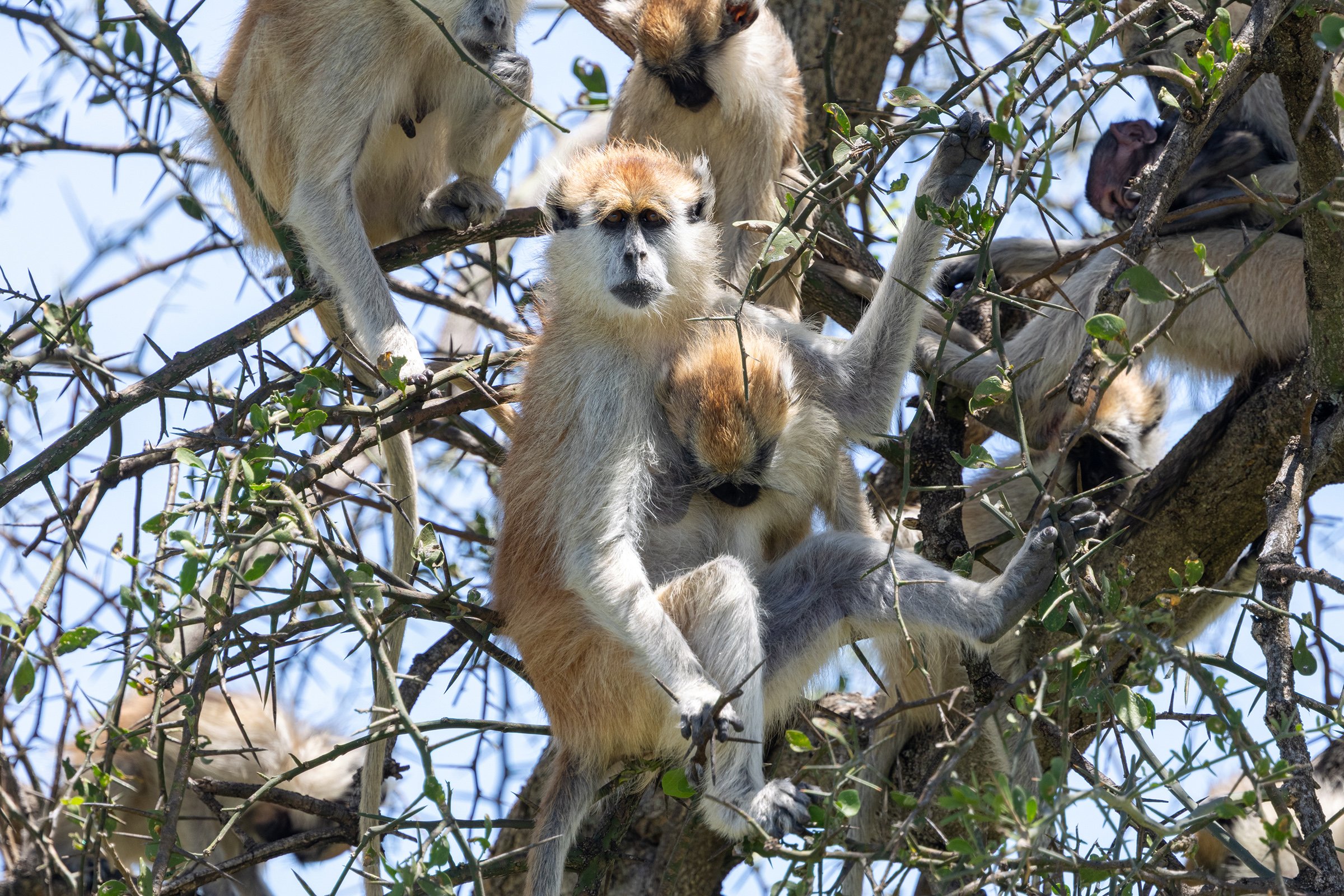
A female Southern Patas Monkey cradles her infant while other members of her troop rest in the surrounding trees. Photographed alongside the Grumeti Fund team in Tanzania’s Serengeti National Park, this female belongs to what may be one of the largest remaining troops of this Critically Endangered primate.
Photo credit: Stratton Hatfield
Our second grant takes us from primates to snakes. In conversations about snake conservation in Kenya, one message came through repeatedly: conserving snakes also means addressing the enormous human cost of snakebite. We’re therefore supporting the Taylor Ashe Antivenom Foundation and the Watamu Snake Farm on a project in Kitui County aimed at improving snakebite prevention, treatment and support for affected communities. Reducing the human cost of living alongside venomous snakes is an essential part of creating space for their conservation.
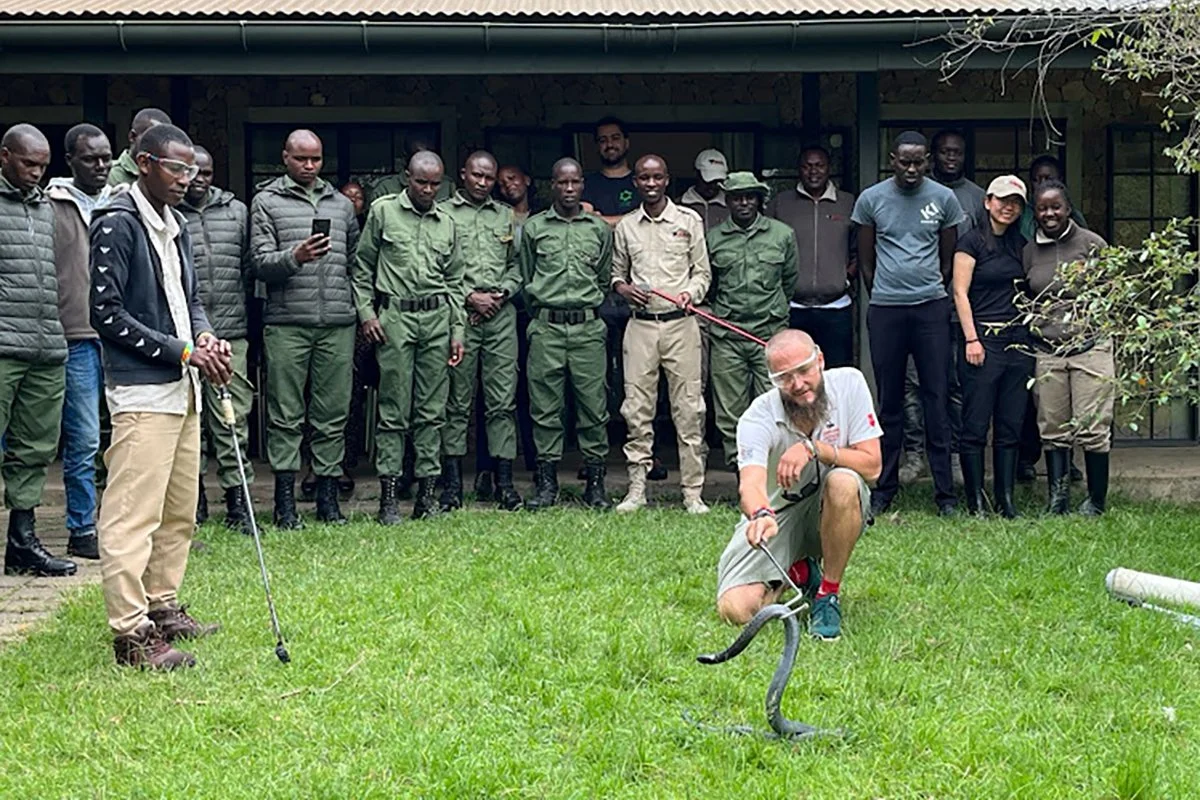
Kyle Ray of Watamu Snake Farm demonstrates safe handling techniques for a venomous snake as part of efforts to reduce human–snake conflict.
Photo credit: Kyle Ray / Watamu Snake Farm / Taylor Ashe Antivenom Foundation
Our third grant perhaps best captures why we created the Small Grants Fund in the first place. Freshwater fish are rarely at the centre of conservation conversations in Kenya, yet its rivers contain an extraordinary and poorly understood diversity of life. We’re supporting Mufaddal Alibhai, working with the National Museums of Kenya, KWS and partners, to search for the Athi elephant-snout fish, Mormyrus tenuirostris, a Kenyan endemic from the Athi-Galana-Sabaki river system that hasn’t been documented for some time.
But the project is about more than finding a single fish. It is also about beginning to better document the freshwater biodiversity of this enormous river system and drawing attention to the quality and health of the river itself. What other species are there that we have simply overlooked? What has disappeared without us noticing? And what can these species tell us about the health and connectivity of the river?
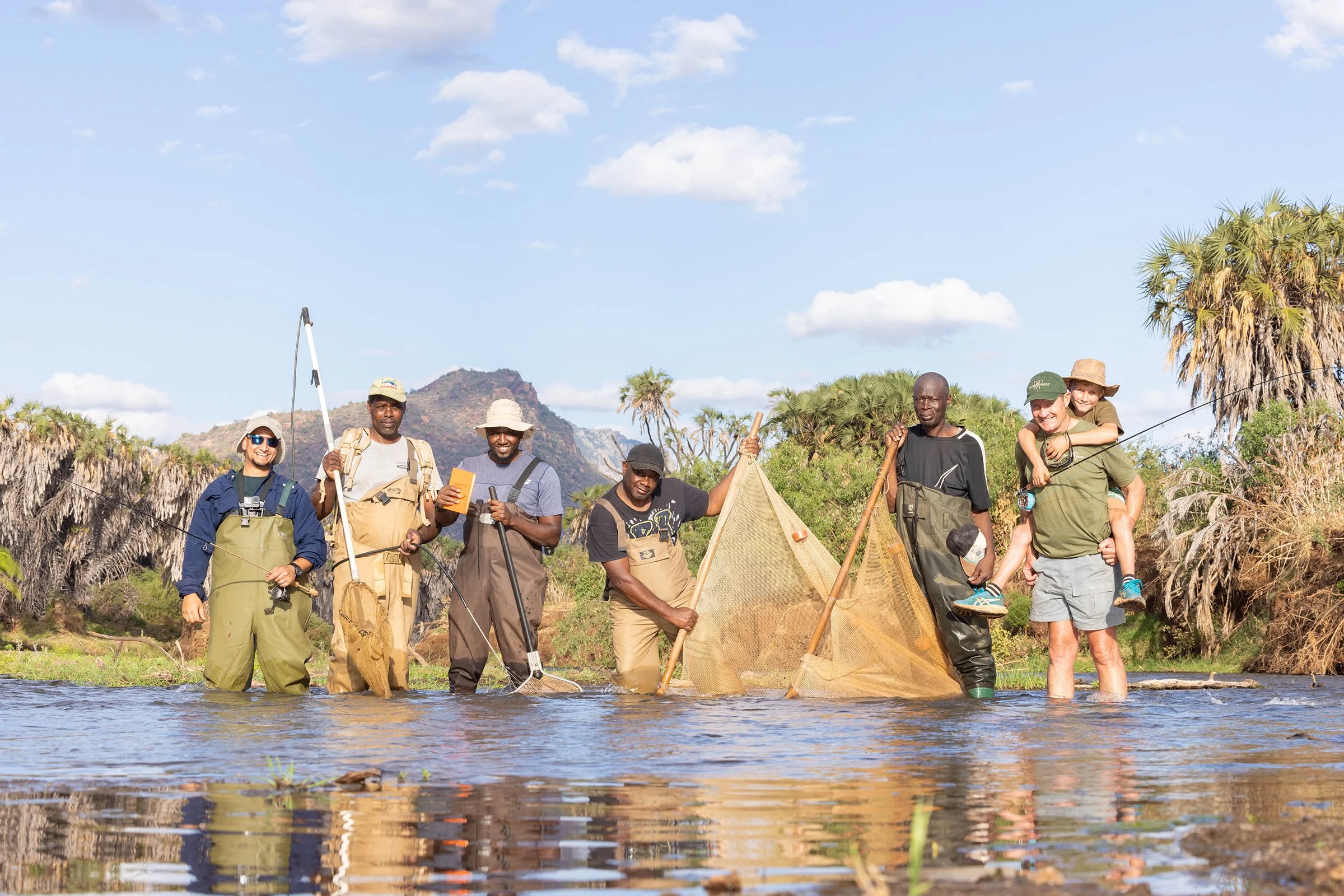
Mufaddal Alibhai (left), alongside experts from the National Museums of Kenya (NMK) and supporters from Tsavo Trust, survey freshwater fish populations across the Athi–Galana–Sabaki River watershed.
Photo credit: Mufaddal Alibhai / FishQuest
Our fourth grant supports Arocha Kenya and the Ngulia Bird Ringing initiative in Tsavo West National Park. Migrant birds were first discovered concentrating around the lights of Ngulia Lodge in 1969, and ringing has taken place there since the early 1970s. More than half a million birds have since been ringed, making Ngulia one of Africa’s great long-running studies of bird migration.
But Ngulia is much more than a research project. For generations of Kenyan birders and ornithologists, spending time there has become something of a rite of passage. We hope our support can help strengthen the science behind this extraordinary project while expanding its role as a place where people can learn bird ringing and experience the wonder of Palearctic and intra-African migration firsthand.
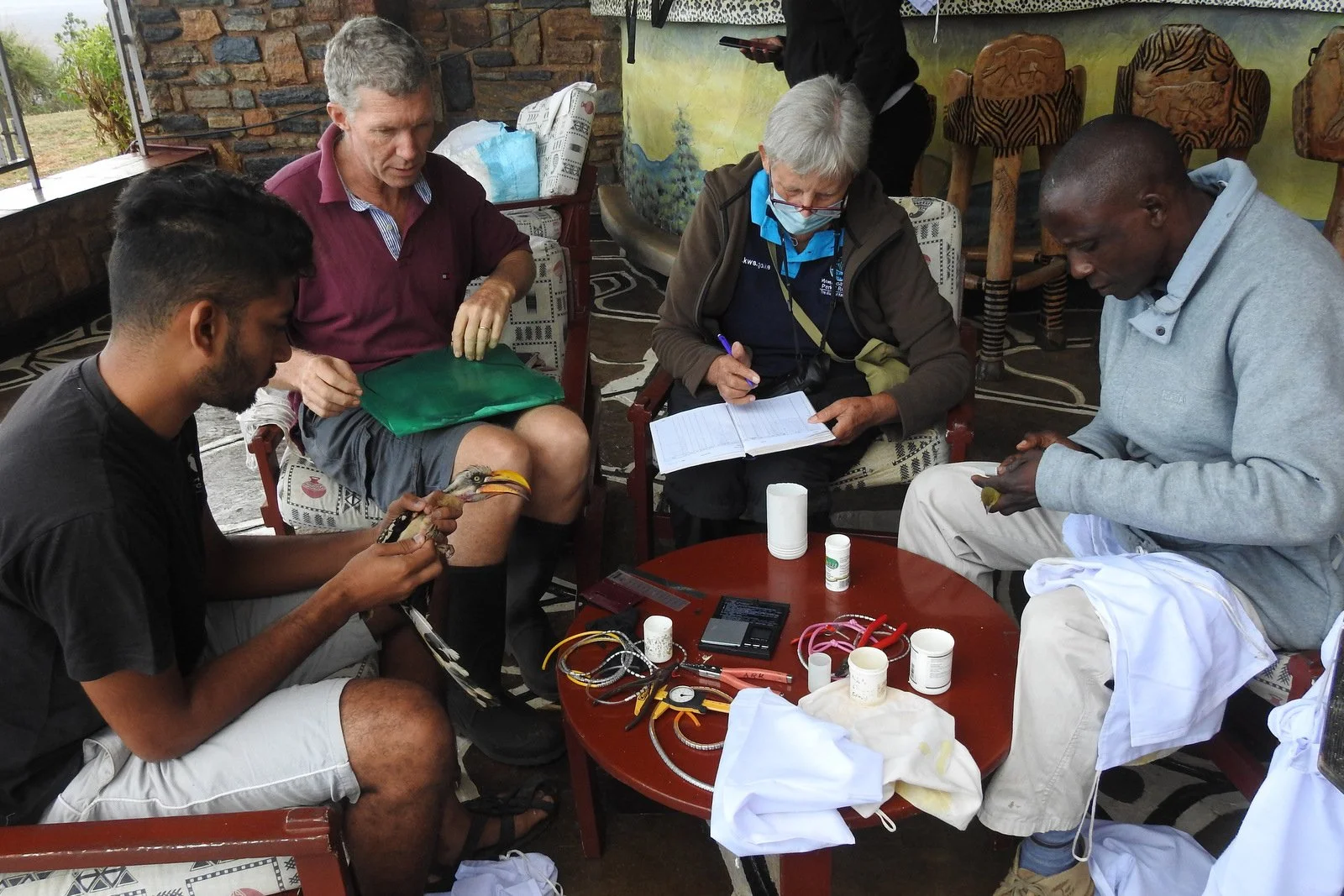
Dr. Colin Jackson of A Rocha Kenya, who leads the Ngulia Bird Ringing Initiative (second from left), and fellow bird ringers hard at work studying and ringing birds at Ngulia. Mustafa Adamjee (left) holds an Eastern Yellow-billed Hornbill, while Stephen Nyaga (right) holds a weaver species.
Photo credit: Sidney Shema / A Rocha Kenya
In just six months, the Small Grants Fund has taken us from one of Africa’s most threatened primates to snakebite, freshwater fish and migratory birds.
That breadth is exactly what we hoped this fund might achieve.
Conservation in southern Kenya and northern Tanzania is about far more than the handful of large mammals that understandably receive much of the world’s attention. It is also about fish and snakes, migratory birds, and the people working quietly to understand and protect them.
These first four grants are only the beginning. We cannot wait to see where the fund takes us next.